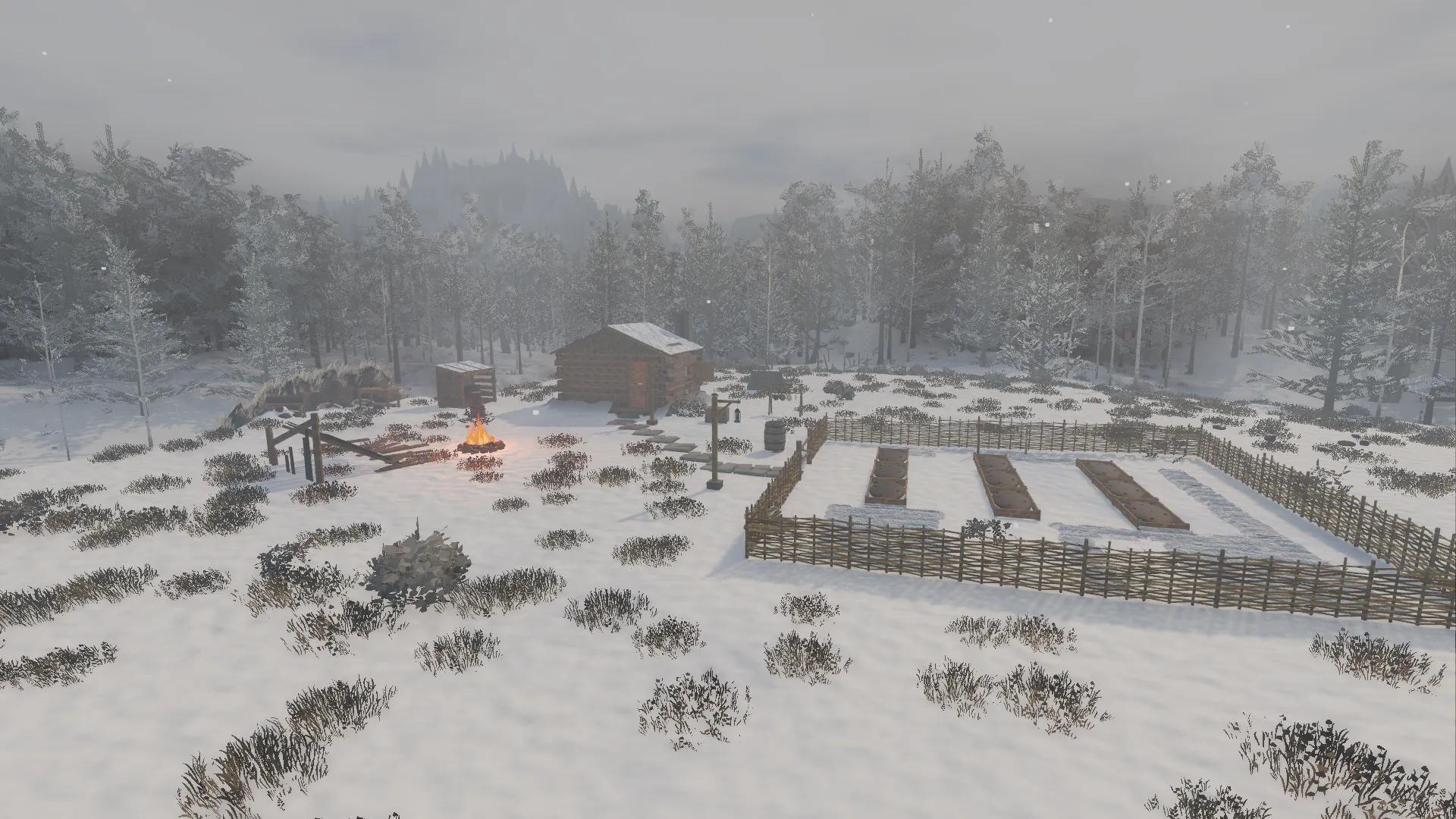
Three games · Sept 2026 to now
Survival game series
Three versions of one survival game in two months. What each taught me about engines, scope and what makes a game fun.
Part 1 · Sept 2026 · Godot
Ocean Island Survival
Godot 4.6, GDScript, GLSL compute shaders
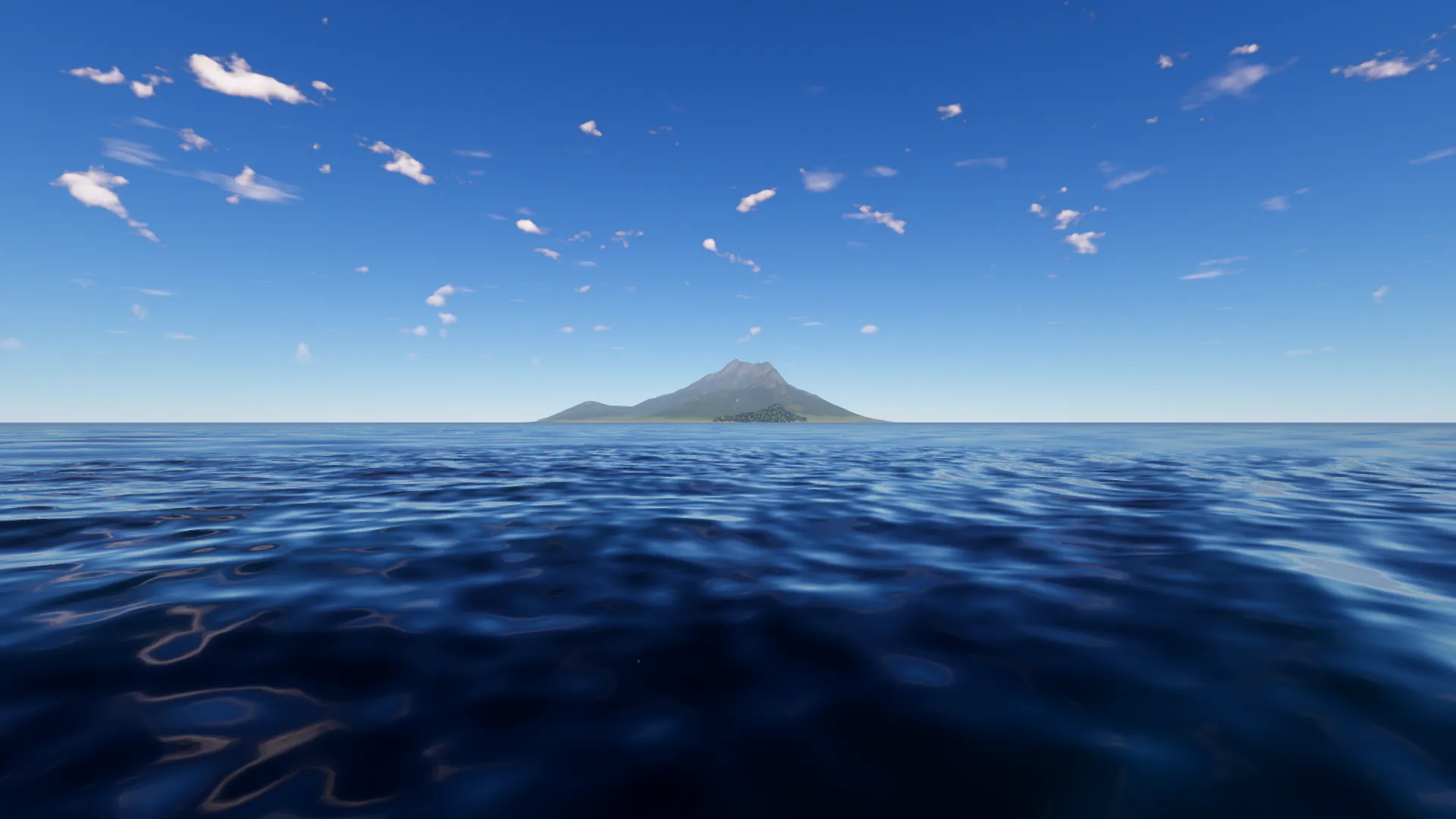
I started with the world. The island had an FFT ocean, about 305,000 plants placed from a biome grid and a GPU simulation for freshwater pools. The survival loop came later. It was a scripted scenario of three increasingly cold nights.
- What worked
- The environment and its performance: a median of 121 FPS across 27 test views at 1080p High on one PC.
- What it missed
- A world that looks good is not yet a game. The survival loop arrived late and stayed scripted.
Part 2 · Sept – Oct 2026 · Luanti engine
Windfall
A fork of the Luanti (Minetest) engine: C++, Lua, Python tools
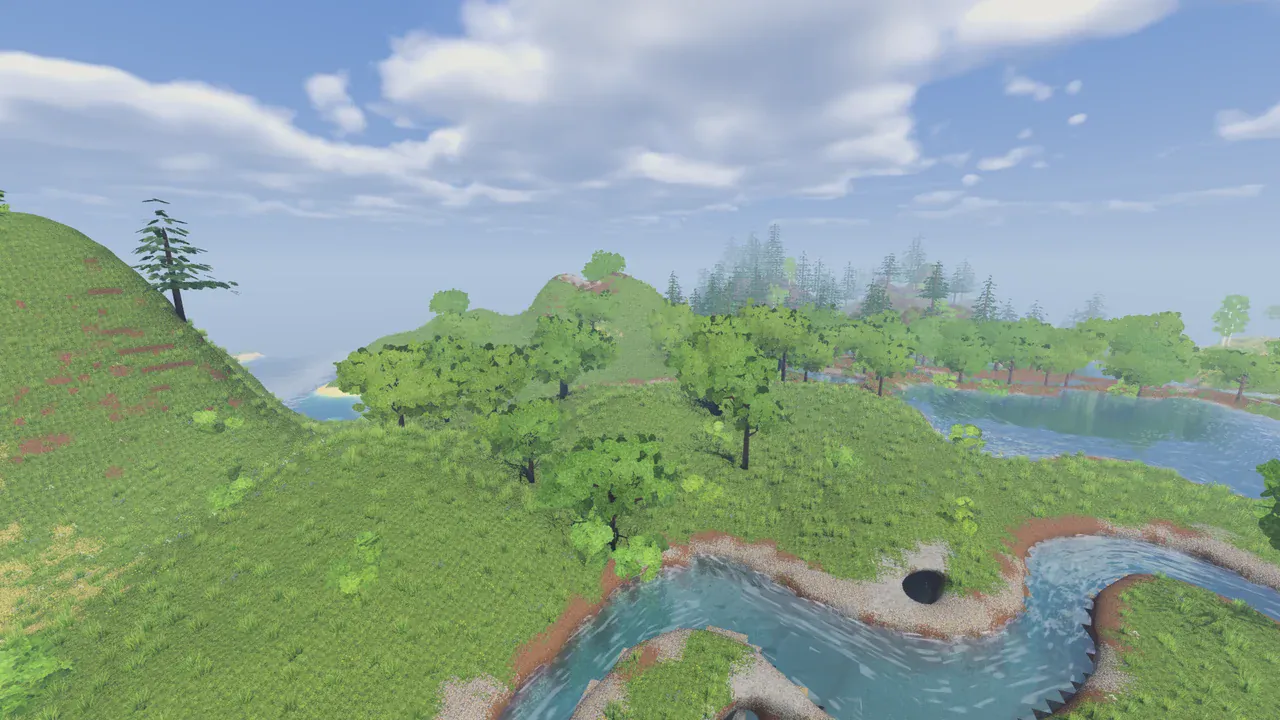
I moved to an engine fork for an open survival world. Then I focused on its look: smooth terrain, authored trees, seasons, weather fronts and coral reefs. Survival meant staying warm and dry against cold, rain and wind.
- What worked
- The world itself, and an off-screen test harness that captured screenshots and injected input without taking over my mouse or keyboard.
- What it missed
- The game was too easy. Resources were everywhere, danger was shallow and building was fiddly. I shelved it on Oct 3 after ten milestones.
Part 3 · Oct 2026 – now · Godot
Homestead3D
Godot 4.6, GDScript, terrain built in code, no native add-ons
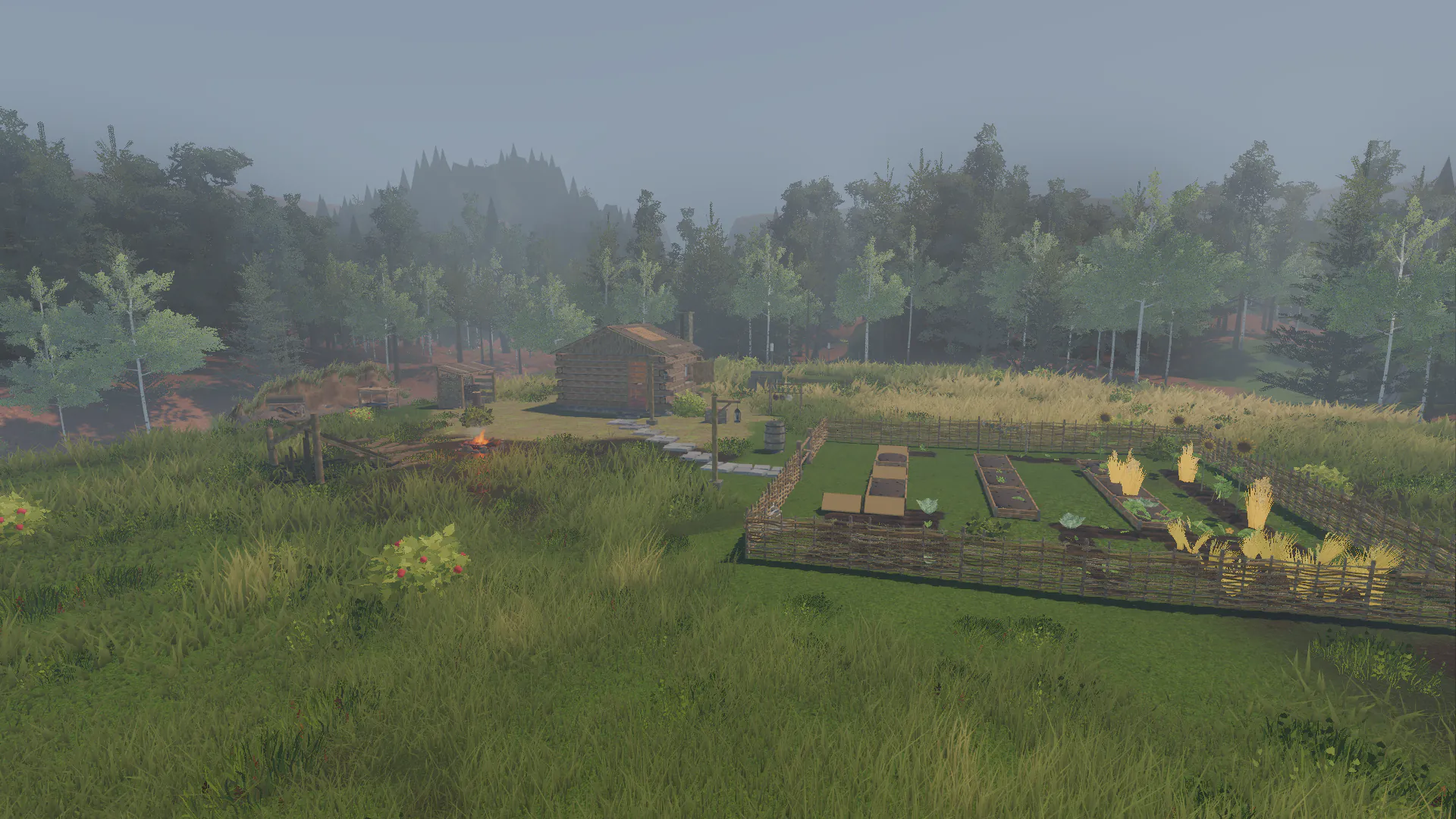
I returned to Godot and started with the design this time. You arrive with very little in a 640 m forest valley. You repair a cabin, grow food and get ready for winter. Wolves come out at night.
- What worked
- Blind playtests now score every in-game day for real risk. The game can't quietly drift back to too easy.
- What it missed
- The process grew heavy again. I measured the cost and cut it back on Nov 5: more game, less process.
What changed between versions
| Ocean Island | Windfall | Homestead3D | |
|---|---|---|---|
| Engine | Godot 4.6 | Luanti engine fork | Godot 4.6 |
| World | 4 km island | Smooth-terrain voxel world | 640 m valley, built in code |
| Built first | The environment | The environment | The game design |
| Threats | Three cold nights, scripted | Cold, rain and wind | Winter, wolves and a bear |
| Testing | Scripted check suites and screenshot sweeps | Off-screen harness and AI players | Scripted play harness and blind playtests scored for risk |
| Result | Playable on itch.io | Shelved after ten milestones | In development |
Can an AI play it?
After shelving Windfall, I rebuilt it as a cube world and used it for an experiment: could AI models play a survival game through a harness built to my spec? The model decides what to do and why. The harness handles how.
In the first five-day run, a small local model, Qwen, died nine times. Only the harness changed. The same model then had zero deaths. A bug quietly deleted every wolf for about a day. It made some “perfect” runs meaningless and taught me to check the test before trusting the score. Claude Sonnet had the best run and survived five days without dying.
I stopped once survival was solved. The later days gave a player nothing to work toward. That was the same problem as before, seen from a new angle.
What carried forward
- Prove the core loop is fun before adding more systems.
- Design scarcity from the start instead of tuning it afterward.
- Building works better with a few fixed snap points than free placement.
- My own playtest is the test that matters most.
- Process has a cost. Measure it, and cut it when it stops paying off.